
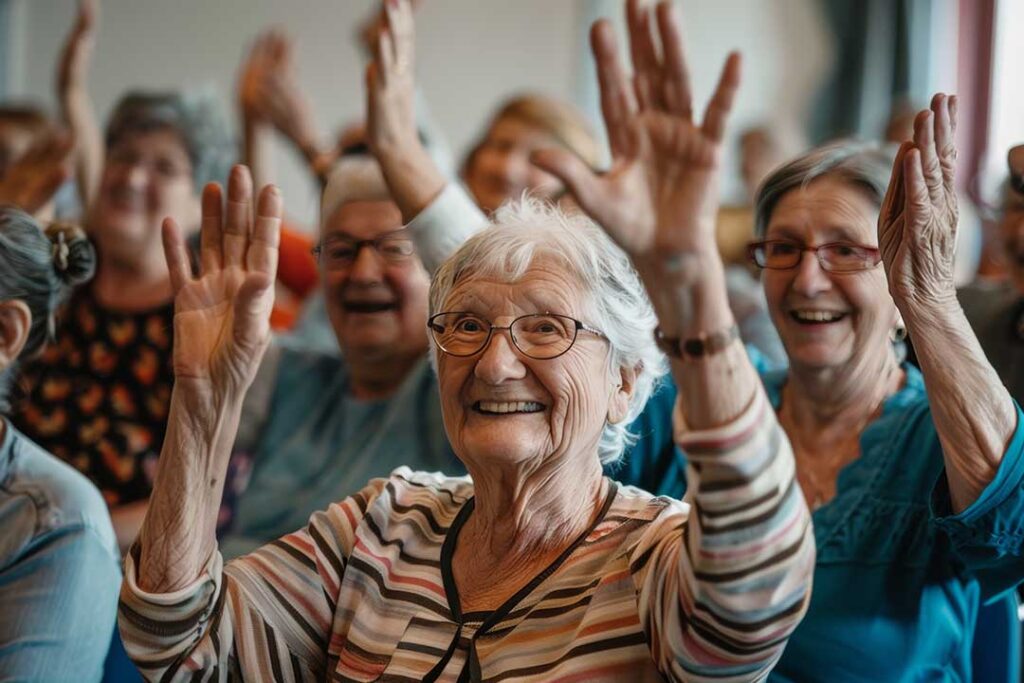
Assisted living can encourage an active lifestyle by making movement, social participation, and everyday independence easier to maintain. The goal is not intense exercise or a rigid schedule. Instead, residents receive opportunities to stay physically engaged, mentally involved, and connected with other people at a pace that reflects their abilities.
For older adults and families in Drexel Hill, PA, this approach can be especially helpful when home maintenance, transportation, winter weather, or reduced confidence makes regular activity more difficult.
What does an active lifestyle mean in assisted living?
An active lifestyle includes more than formal exercise. It can involve walking to meals, joining a group activity, tending plants, participating in a discussion, or helping with a simple daily task.
A resident may be active by:
- Walking through shared areas rather than remaining in one room
- Joining a stretching, balance, or movement class
- Taking part in arts, music, games, or educational programs
- Visiting with neighbors during meals or social gatherings
- Assisting with light activities that provide a sense of purpose
- Spending time outdoors when weather and safety conditions permit
This broader definition matters because mobility levels vary. A person who uses a walker, wheelchair, or other support can still have an active routine. Activity should be adapted to the individual rather than measured against someone else’s ability.
How does assisted living make daily movement easier?
Assisted living communities are generally designed so that essential activities are located within a manageable distance. Dining areas, lounges, activity rooms, outdoor spaces, and personal living areas may be connected by accessible hallways and seating areas.
That layout can create natural opportunities for movement without requiring a separate trip to a gym. Walking to meals, visiting a common room, or moving between scheduled activities may help residents avoid long periods of inactivity.
Staff assistance can also reduce barriers. A resident who feels uncertain about walking alone may be more comfortable participating when someone is available to provide reminders, directions, or appropriate support. The purpose is to encourage safe independence, not to take over tasks that a resident can still manage.
Which activities are commonly offered?
Programs differ, but many assisted living settings include activities that support strength, balance, flexibility, coordination, and endurance. Examples may include:
- Seated or standing stretching
- Gentle strength exercises using light resistance
- Balance practice and fall-prevention activities
- Walking groups or indoor walking routes
- Dancing, chair exercise, or movement with music
- Gardening and seasonal outdoor activities
- Craft projects that use hand coordination
- Games that combine movement with social interaction
Programs may also include nonphysical activities that support an active routine. Reading groups, current-events discussions, cooking demonstrations, memory games, and local history programs encourage residents to remain mentally engaged.
A balanced schedule recognizes that physical, social, and cognitive activity often reinforce one another. A resident may be more willing to walk to a program when the activity is personally meaningful.
Can residents stay active if they have health or mobility limitations?
Yes. Activity can usually be modified for different physical abilities, although specific participation should follow the person’s care plan and medical guidance.
Someone with arthritis may benefit from gentle range-of-motion exercises. A resident recovering from illness may begin with short periods of activity and rest. A person with balance concerns may participate from a seated position or use an assistive device.
Useful adaptations can include:
- Shorter activity periods
- Seated versions of standing exercises
- Additional rest breaks
- Smaller groups with closer supervision
- Clear walking paths and stable seating
- Activities focused on hand movement or coordination
- Scheduling exercise during the time of day when energy is highest

A common misconception is that an activity must be strenuous to be useful. Regular, appropriate movement may support flexibility, circulation, confidence, and the ability to perform daily tasks. The safest routine is one that matches current ability and can be adjusted as needs change.
Why do social activities matter for physical activity?
Social connection can make movement feel worthwhile rather than burdensome. Residents may be more likely to attend a walking group, exercise session, or outdoor gathering when they know other people will be there.
Group activities can also provide encouragement and routine. Familiar faces may help a new resident feel comfortable joining in. Conversation during a walk or shared activity can make the time pass more naturally.
Social participation may include activities that are not physically demanding, such as card games or discussion groups. These still contribute to an active lifestyle by reducing isolation, supporting regular routines, and encouraging residents to leave their apartments or rooms.
How do seasons affect activity in Drexel Hill?
Seasonal conditions can influence how easily older adults stay active. Cold temperatures, snow, ice, rain, and shorter winter daylight may make outdoor walking less practical. Even in warmer months, heat and humidity can affect comfort and safety.
Indoor options become particularly useful during difficult weather. Hallway walking, indoor group exercises, activity-room programs, and social gatherings can help residents maintain routines without navigating slippery or uneven outdoor surfaces.
During mild weather, outdoor courtyards, gardens, covered seating areas, or supervised walks may provide a change of scenery. Outdoor activity should still account for shade, hydration, footwear, temperature, and the resident’s health needs.
Families may want to ask how activity schedules change during seasonal weather and whether indoor alternatives are available when outdoor plans are canceled.
How can families encourage an active routine?
Family members can support activity by focusing on consistency and enjoyment rather than performance. A short visit that includes a walk, conversation in a common area, or participation in a simple activity may be more sustainable than an ambitious plan.
Helpful questions include:
- Which activities does the resident enjoy?
- What time of day is the resident most alert?
- Are there activities suited to the resident’s current mobility?
- How are programs adjusted for fatigue, pain, or balance concerns?
- What happens when weather prevents outdoor activity?
- How are changes in walking ability or participation communicated?
Personal interests often provide the strongest motivation. A resident who dislikes exercise may enjoy gardening, music, visits with grandchildren, or helping prepare decorations for a seasonal event. Those activities can promote movement without presenting it as a workout.
What should residents watch for when increasing activity?
New or changing symptoms should not be ignored. Chest discomfort, unusual shortness of breath, faintness, sudden weakness, severe pain, or confusion require prompt attention according to the resident’s care plan and emergency guidance.
It is also useful to notice less obvious warning signs, such as persistent fatigue after activities, repeated near-falls, new difficulty standing, or a sudden decline in participation. These changes may indicate that an activity needs modification or that the resident’s health status should be reviewed.
An active lifestyle in assisted living is not defined by how much a person can do on a single day. It is built through safe opportunities to move, participate, connect, and make choices regularly. When activities are accessible and adapted to individual needs, residents can continue developing routines that support independence and quality of daily life.
